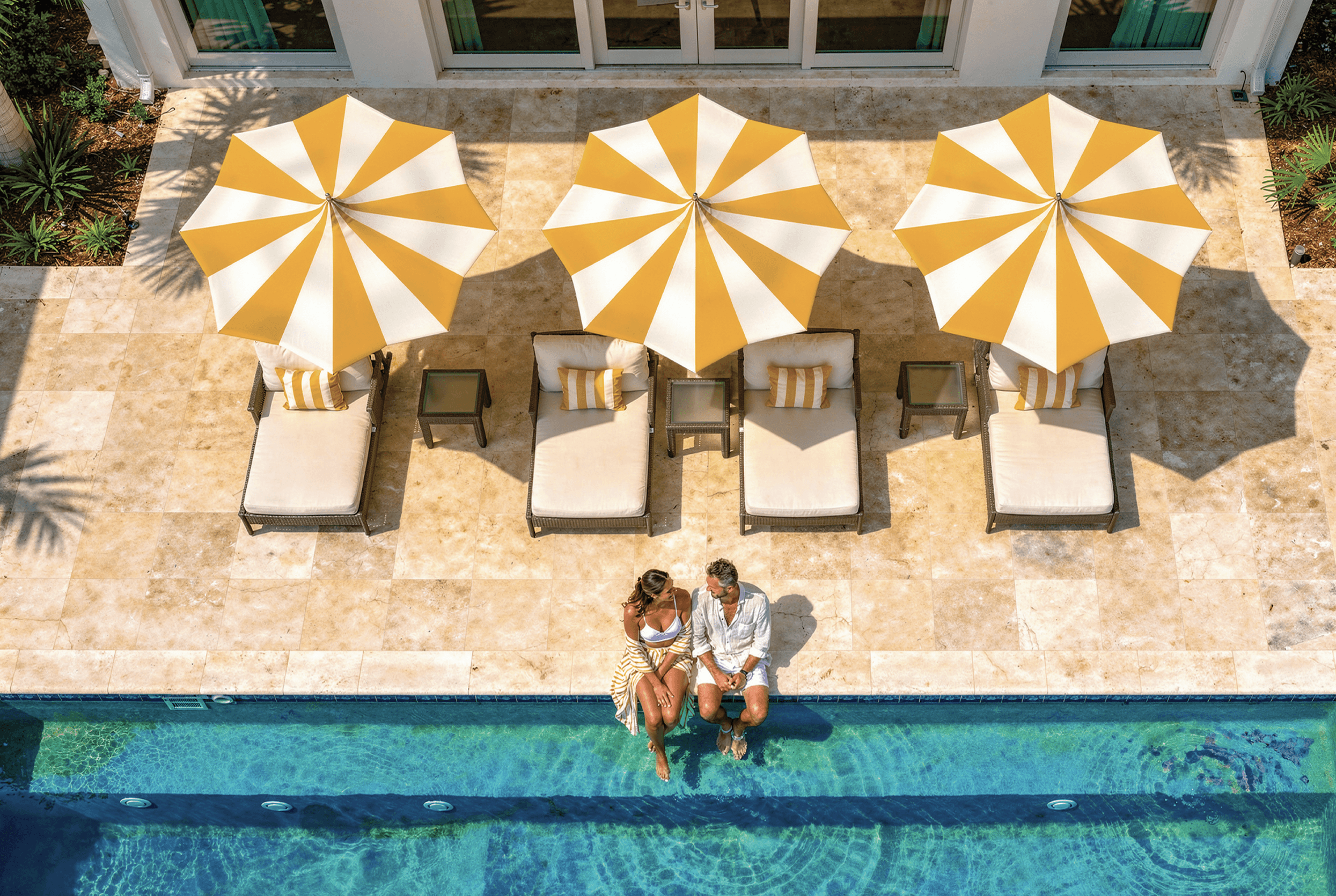

In 2025, Frankford Umbrellas came to JWC with a problem most 100-year-old companies eventually face: the work was world-class, the brand wasn’t.
For more than a century, Frankford had been building premium commercial-grade umbrellas for hotels, resorts, retailers, designers, and homeowners — marine-grade fabrics, precision-engineered frames, and a level of service that turned first-time buyers into lifetime customers. Their products held up in conditions that shredded competitors’. Their team answered the phone. Their customers came back.
But from the outside, none of that was fully legible. The brand didn’t reflect the quality of the work. The website didn’t either. And in the mid-to-upper-tier market Frankford was built to serve — hotels, resorts, and condo developments specifying premium commercial umbrellas — the category was crowded with louder, flashier competitors. Frankford was often the smarter product on the shelf. It wasn’t yet the more visible brand in the room.
The opportunity was big enough to require rethinking almost everything. Brand. Website. Catalogs. Sales kits. Trade shows. Direct mail. Email. Social. Magazine advertising. PR. This was going to be a full Growth Stack engagement — and it was going to touch every surface where Frankford met a customer.
As we worked through discovery, leadership interviews, customer research, and competitive positioning sessions with the Frankford team, JWC ran its Tension System process and surfaced not one but four paradoxes at the center of the brand — each of which needed to be resolved simultaneously.
Affordable luxury vs. premium credibility. Frankford’s sweet spot was the thing everyone in the category was chasing: high-end performance and design without the markup. But positioned carelessly, that reads as “neither here nor there.” Not budget enough to win on price. Not fancy enough to claim luxury. They needed to hold the middle ground with confidence.
Reliability vs. excitement. Frankford was known for dependability. Some of the higher-profile competitors in the category — TUUCI among them — leaned into aesthetic boldness and emotional appeal. Dependability sells, but on its own it rarely excites. Frankford needed to make reliability itself feel aspirational — the quiet thrill of certainty, the kind of beauty you can count on season after season.
Local roots vs. national scale. The family-owned, roll-up-your-sleeves culture was a real strength, but so much of the growth opportunity lived outside the markets Frankford had served for decades. Growing without losing the culture was a genuine concern.
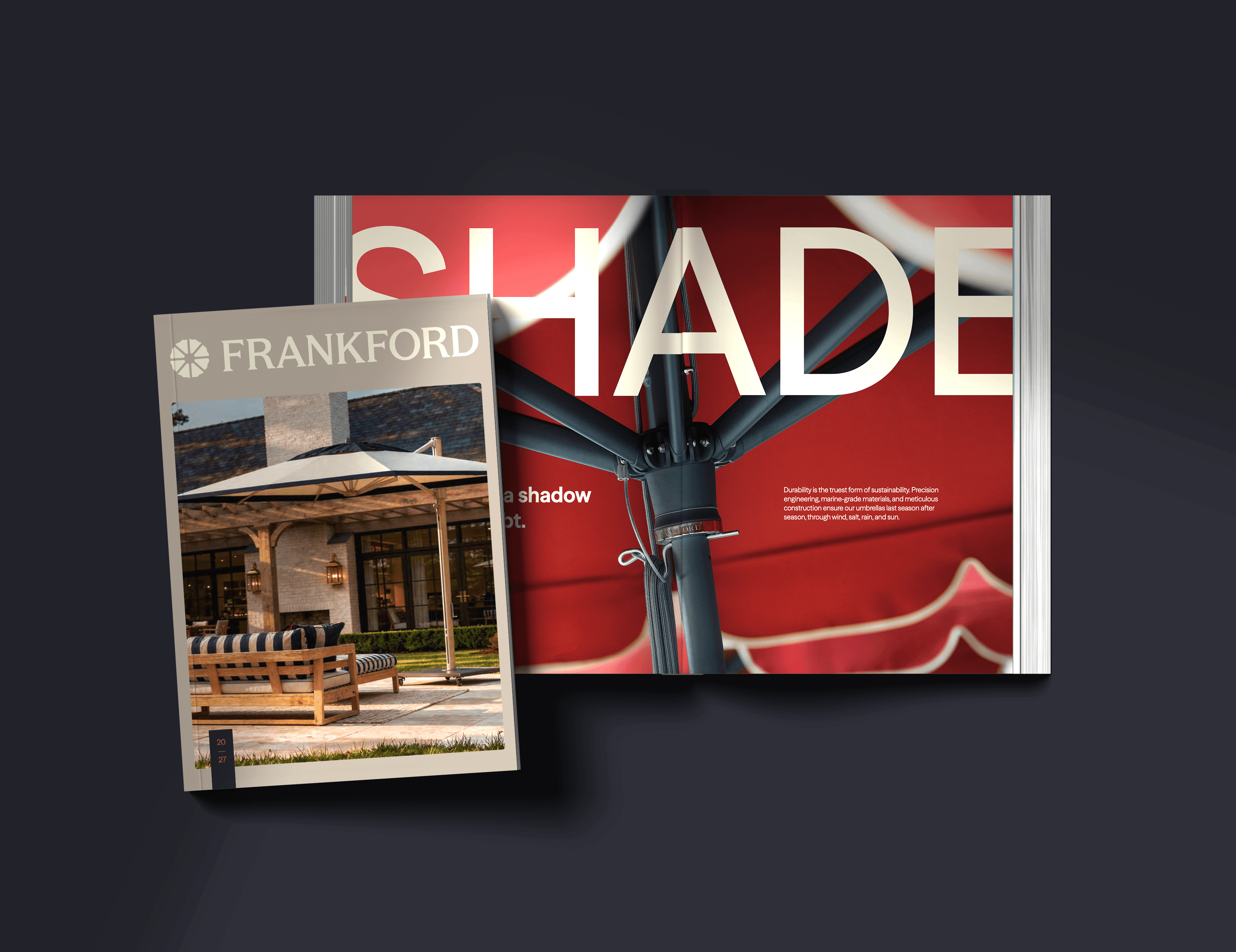
Product education vs. emotional appeal. Frankford’s technical edge — marine-grade materials, replaceable parts, serviceability — was real but not emotionally resonant. Specs don’t inspire. The peace of mind they create does.
These weren’t four separate problems. They were four facets of the same paradox: Frankford had the substance of a premium brand but needed to stop letting the market read “affordable” as “compromise.”
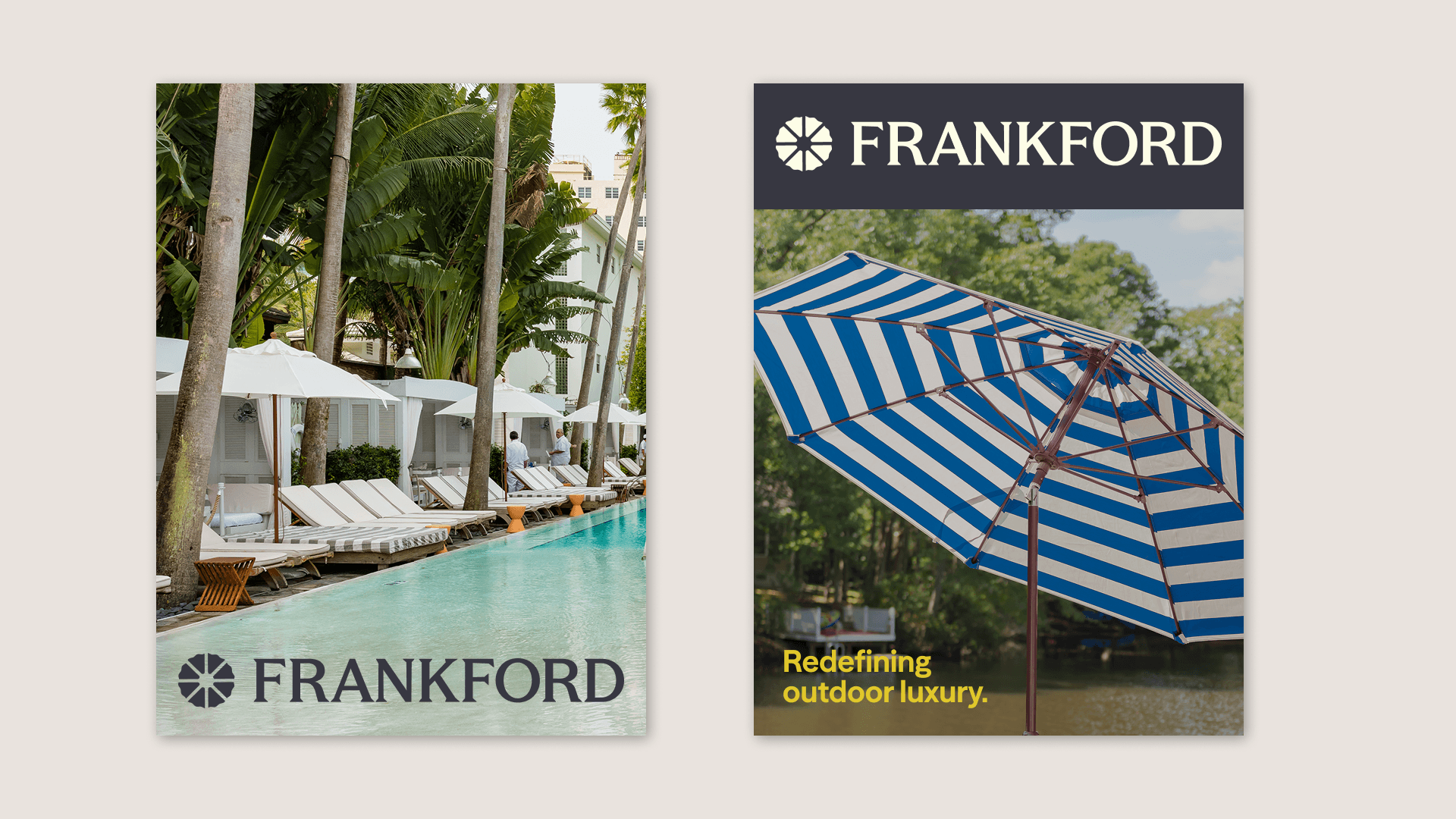
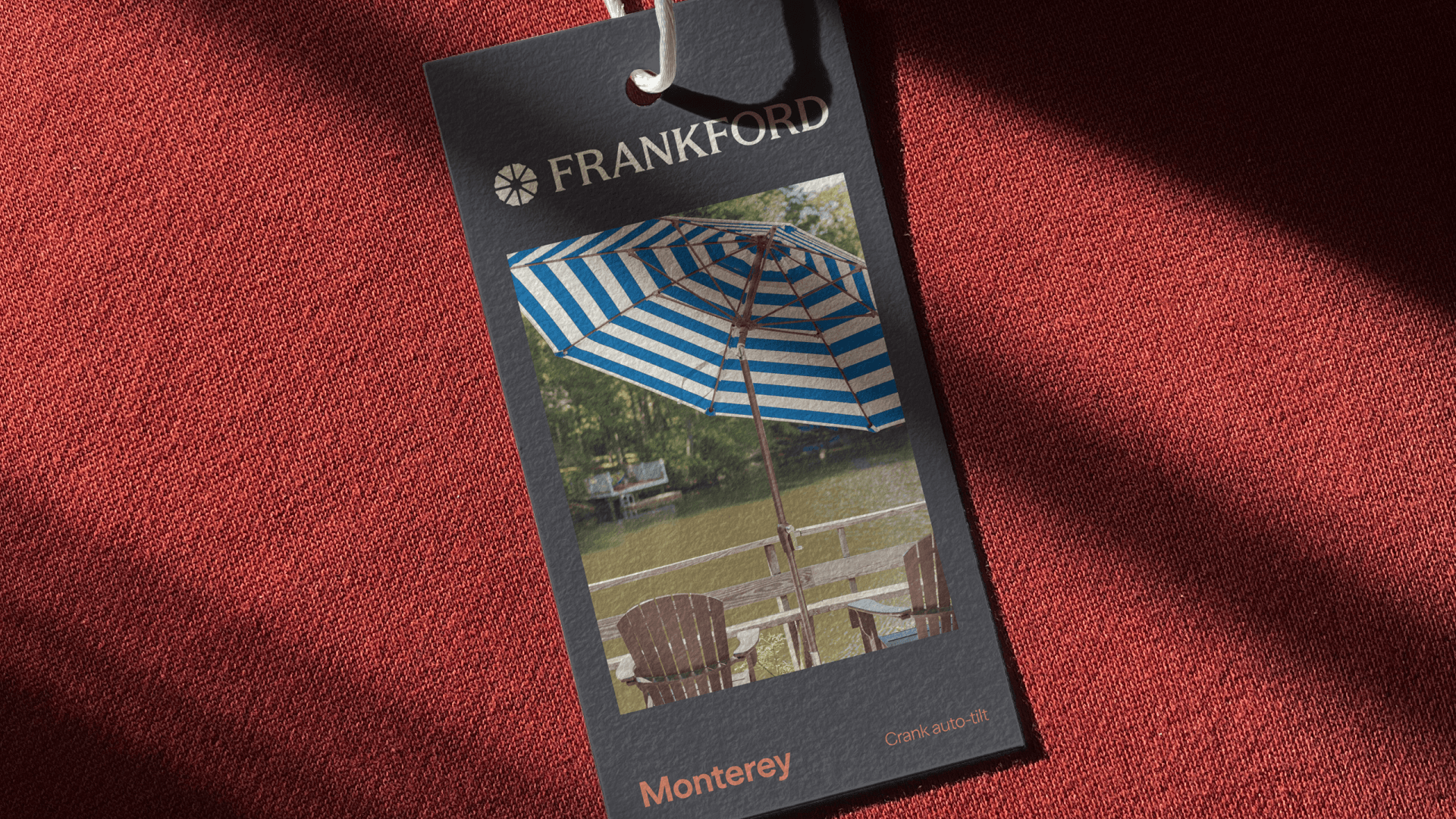

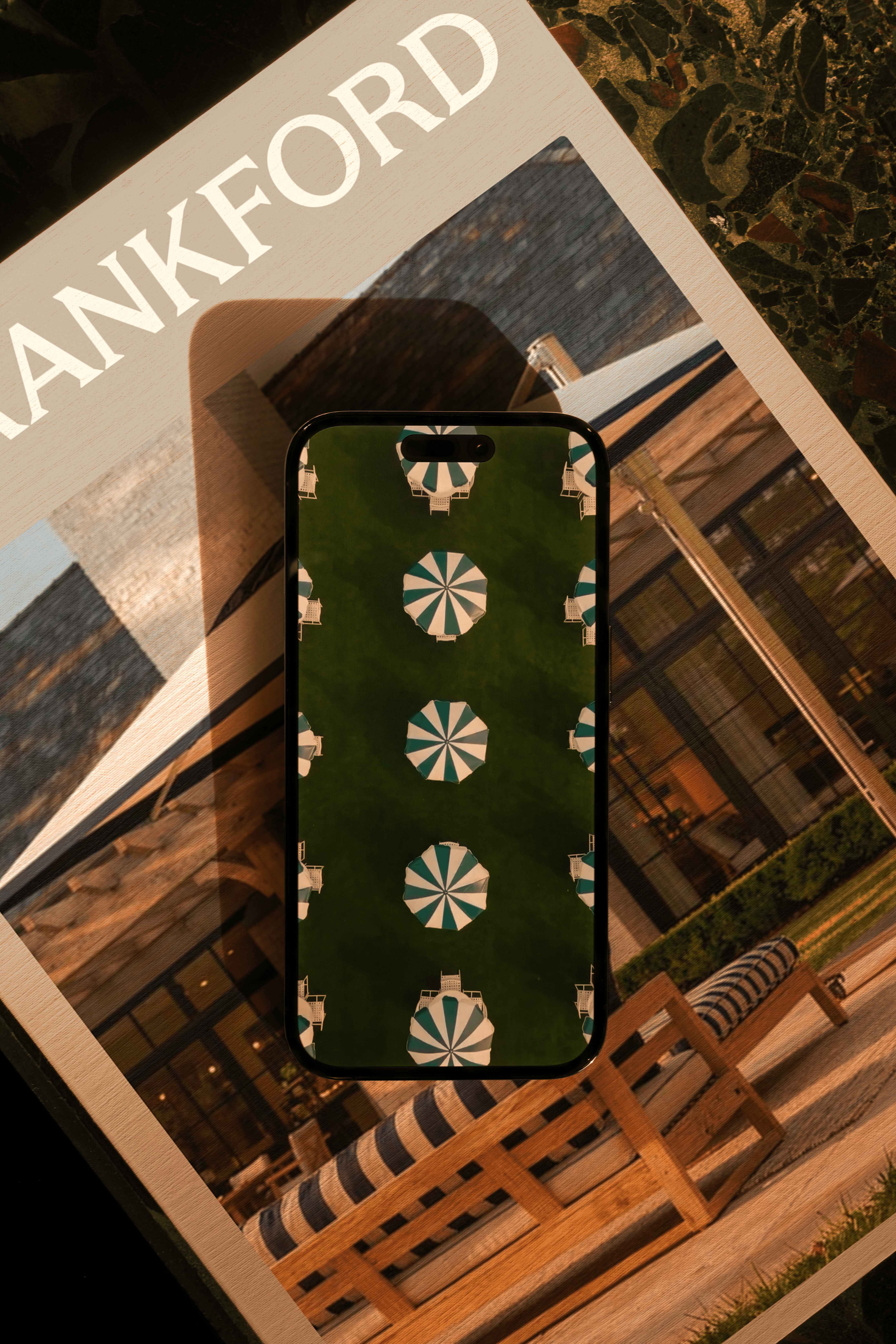
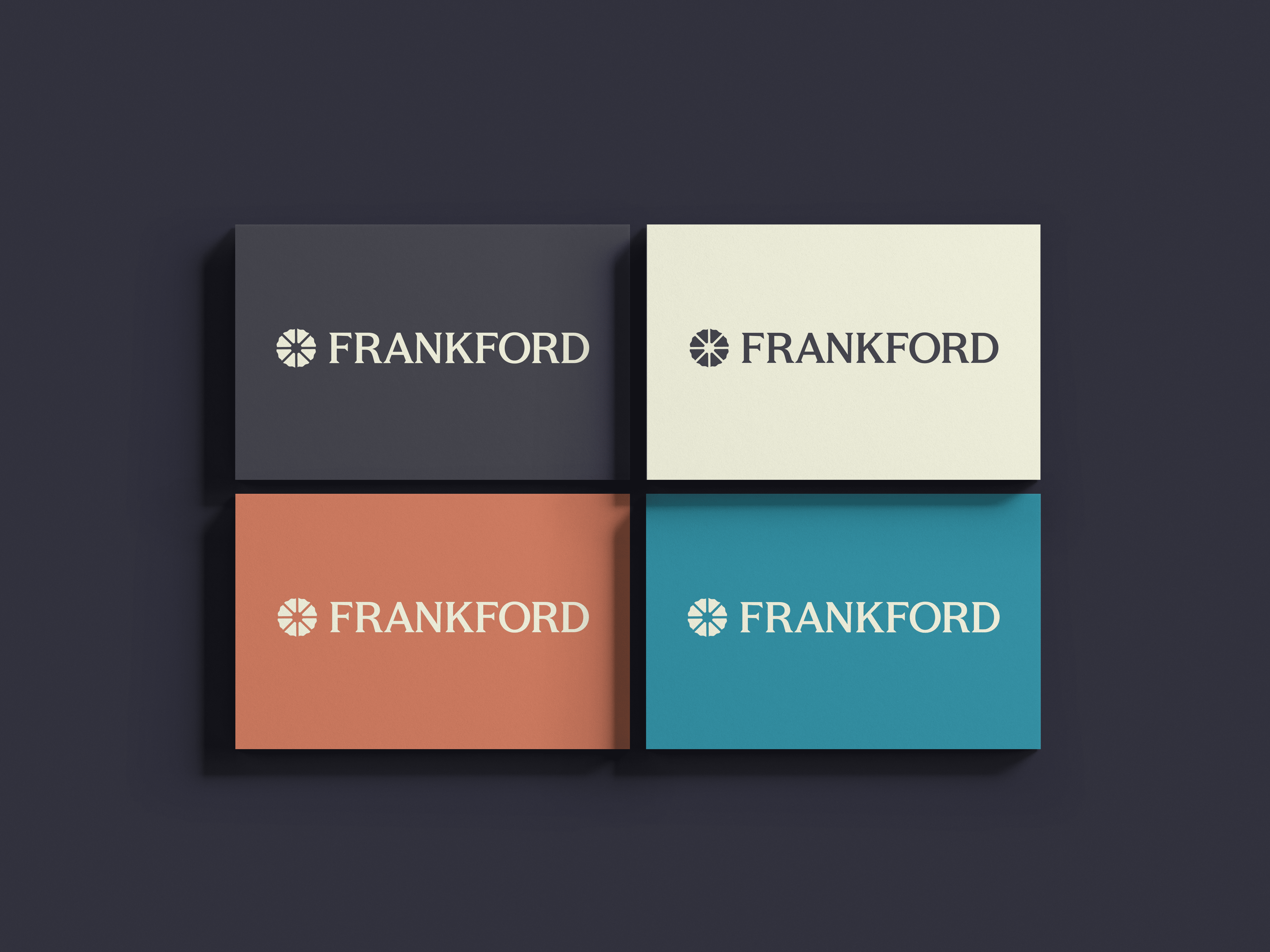
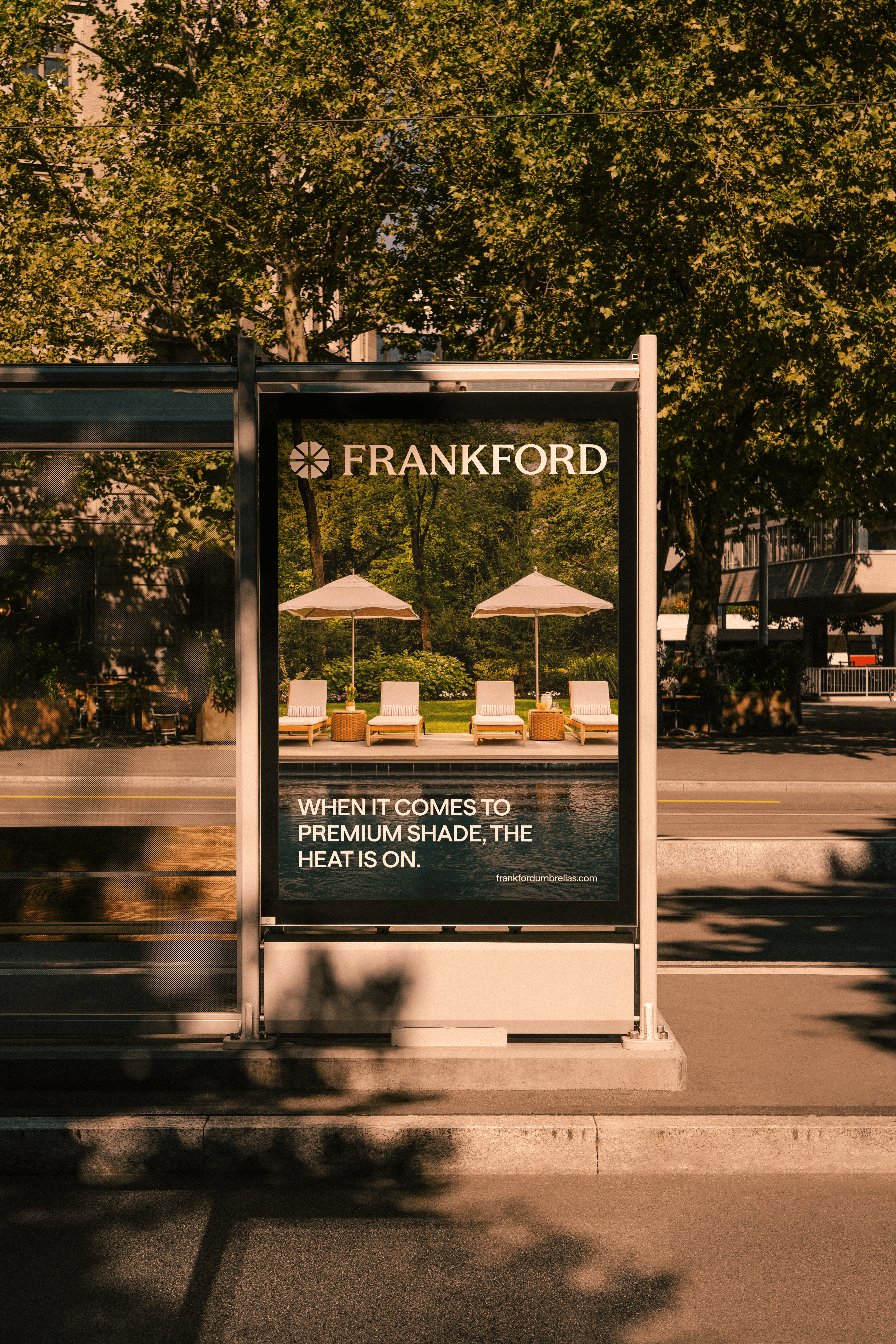
The breakthrough was a single reframe. Frankford’s middle ground wasn’t a compromise. It was a point of view. The category had been teaching buyers that luxury meant overpriced and approachability meant generic. Frankford had been quietly operating outside that false choice for a century — delivering premium performance and refined aesthetics at a rational price, and standing behind every product with service that competitors couldn’t match.
That wasn’t “affordable luxury.” That was intelligent luxury.
The word mattered. Intelligent reframed the price advantage from a compromise into a savvy choice. It made the middle ground defensible — even enviable — by grounding it in honest craft, substance over ego, and the confidence of getting the quality right without getting charged for the marketing.
Out of that reframe came a Core Idea that would organize every layer of work that followed: “Shade without a shadow of a doubt.” Five words that carried quality, certainty, confidence, and a quiet kind of humor. The brand had its anchor.


This was a full-stack engagement. Each layer of the Growth Stack produced the inputs to the next.
Strategic Foundations
The work started with Strategic Foundations. The ICP Spectrum System defined who Frankford was actually built to serve across four distinct audiences — hospitality buyers (hotels, resorts, condo developments), independent retailers, architects and designers, and discerning homeowners — each with their own buying process, their own language, and their own entry point into the brand. The Positioning System resolved what Frankford was in the market: not budget, not legacy-for-legacy’s-sake, and not one of the flashier premium competitors either. The intelligent alternative — a century of American craftsmanship and design delivered without the markup or the pretension. The Market Focus System sequenced where to invest first: mid-to-upper-tier hospitality in Florida and the Caribbean was the growth frontier, with retailers and designers supporting and expanding the brand’s commercial footprint.
Brand Foundations
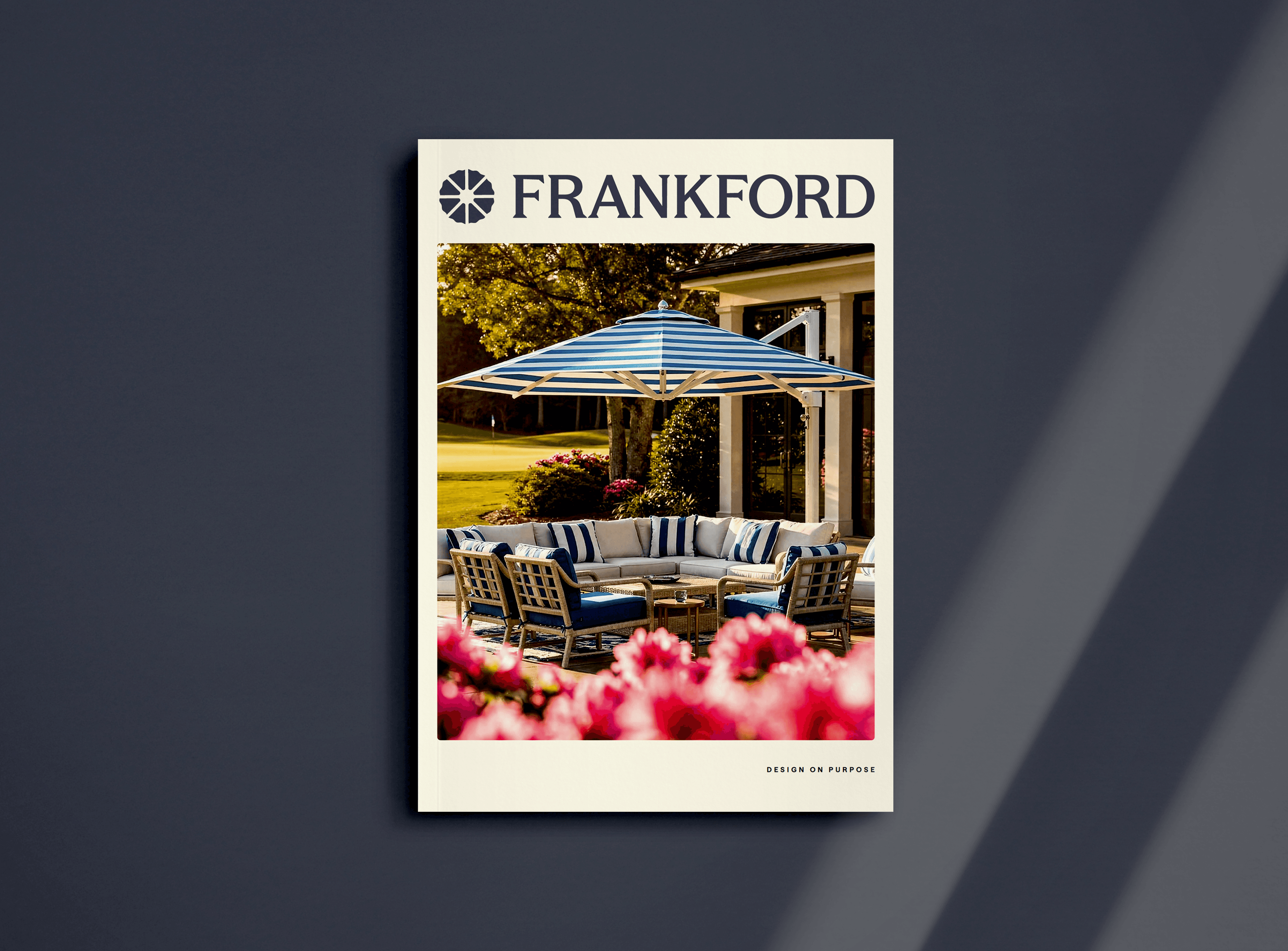
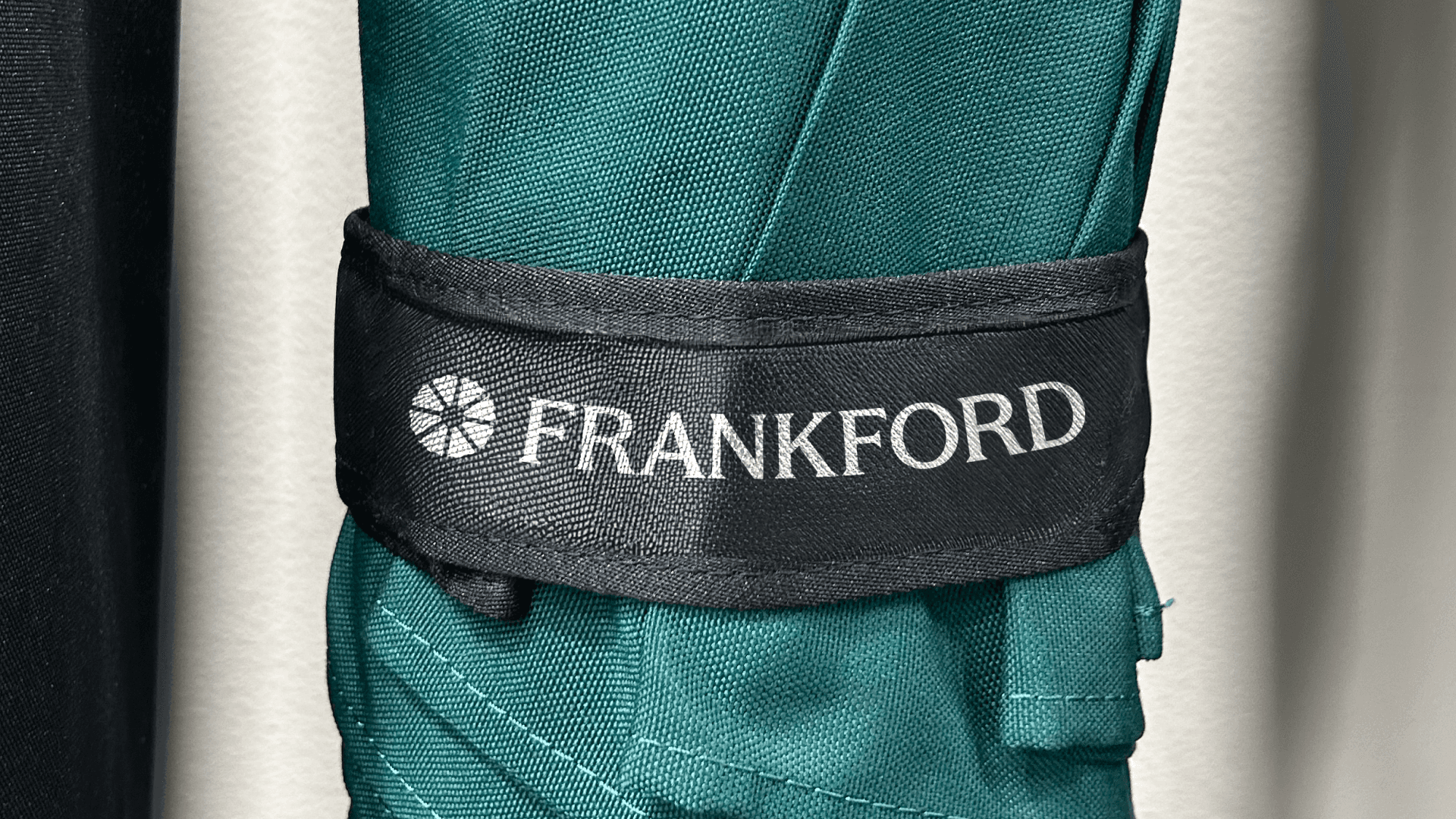
That positioning decision became the input to Brand Foundations. The Core Idea System resolved four intersecting tensions into a single repeatable brand posture: Shade without a shadow of a doubt. The Messaging System structured how the idea scaled across the four audiences — each audience got its own dedicated message, secondary messages, and proof points, all organized around the same central idea. The Written Identity System defined the brand story, values, and voice — rooted in honest craft, 100+ years of American manufacturing, and phrases like intelligent luxuryand durability is the truest form of sustainability that the team could carry into every room. The Visual Identity System refreshed the logo and the full visual system, giving Frankford a commercial-grade look that finally matched the commercial-grade product.
Marketing Foundations
With the brand in place, we moved into Marketing Foundations. The Customer Journey System mapped how each of the four ICPs would move from awareness to purchase — and how they would return as repeat buyers. The Channel Role System defined what each surface was for across a more complex mix than most engagements require: the new website as the central brand and commerce hub; a redesigned catalog system (Core, Designer, and Beach catalogs) as the physical brand experience for reps and specifiers; fabric kits and shade design kits as the tactile sales moment for retail showrooms; trade show booth design for HD Expo and BDNY; email, social, and print advertising for ongoing awareness; PR and feature coverage for industry legitimacy.
Growth Engine
The Growth Engine is what made all of it go. The Content System turned the positioning into a pipeline of work across every channel — magazine ads, product one-pagers, emails, social content, blog articles, and video. The Campaign System built repeatable structures that let a single product launch, trade show appearance, or seasonal push deploy cleanly across catalogs, mailers, magazine ads, website updates, email campaigns, and social posts from a single strategic source.
A sweeping sales enablement program was built from scratch: a Master Sales Kit combining the Fabric Kit and Shade Design Kit, all three product catalogs (Core, Designer, Beach), an MSRP book, folding fabric and fringe cards, fabric and frame finish sample rings, a Retail Booklet for homeowner buyers, a physical extrusion kit system for six major product lines, and audience-specific Mailer Lookbooks for hospitality, beach concessionaires, beach shops, retail, and property management. Trade show presence was designed end-to-end. A Patio & Hearth feature article was secured. Monthly email to the customer base was revived. Social giveaway campaigns ran on Instagram. The engine is still running.
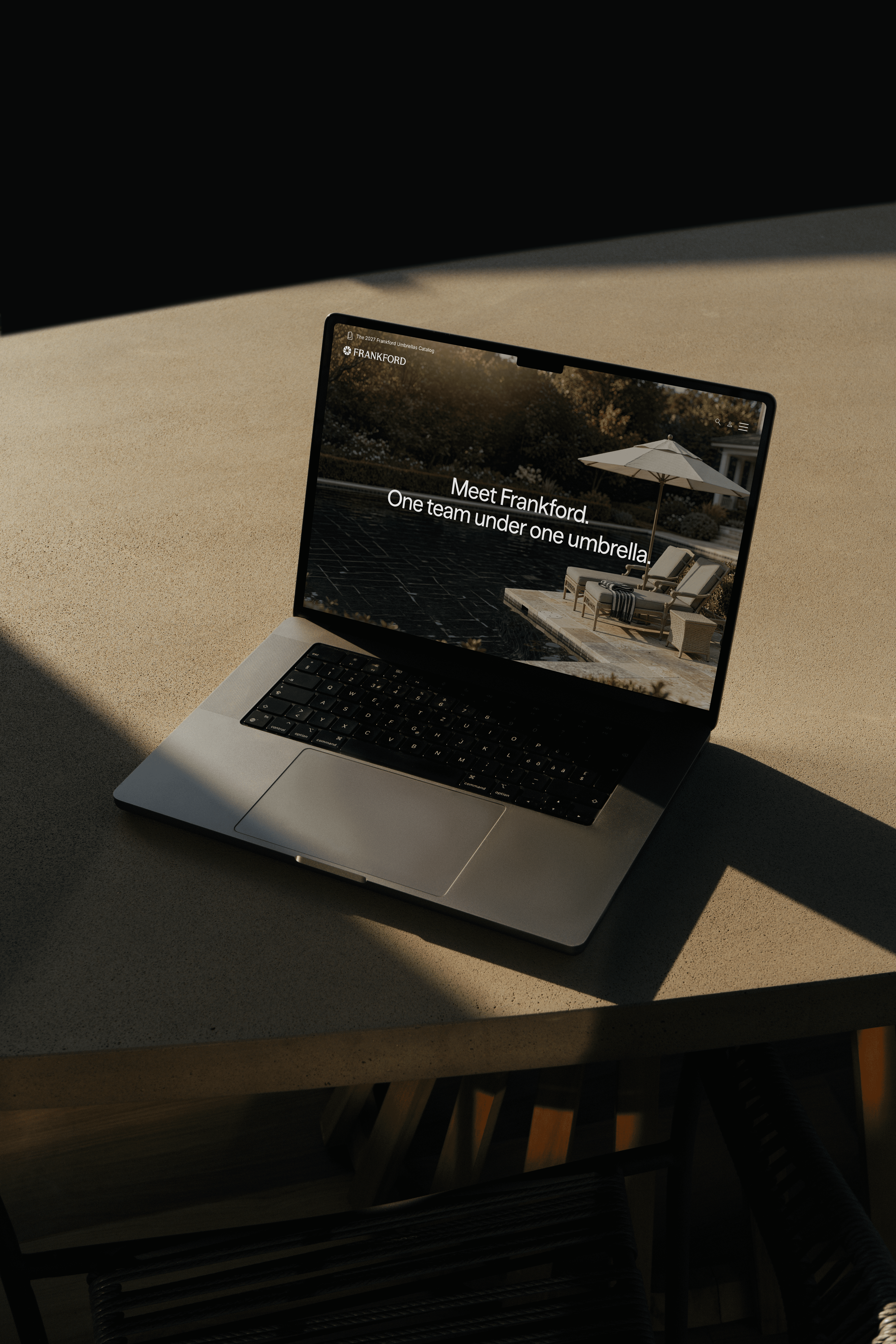
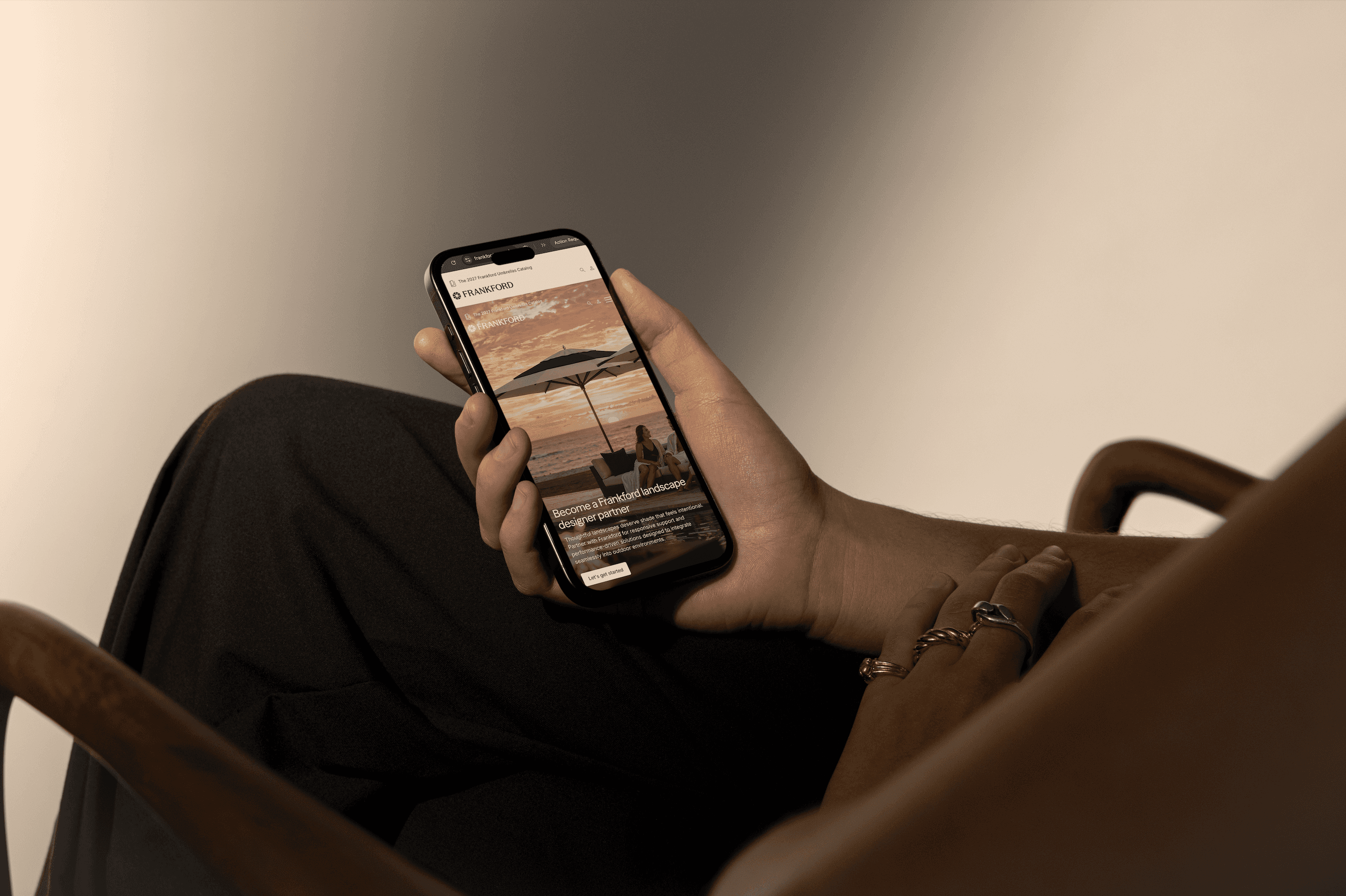
Frankford stopped looking like a well-kept secret and started looking like the intelligent alternative to luxury they had always actually been.
Before the engagement, Frankford had a century of craft that the market couldn’t fully see. After the engagement, every touchpoint tells the same story. The website, the catalogs, the sales kits, the trade show presence, the magazine ads, the direct mail, the social — each surface reinforces the same Core Idea, the same positioning, the same set of proof points. Reps and retailers carry the brand into their conversations with a kit that makes the story tangible. Specifiers encounter the brand on a magazine page, then online, then in a catalog, and each encounter sharpens the perception rather than splintering it.
The downstream effect has been broad. Magazine editorial coverage came in. Sales conversations have become easier to open because the brand is now doing the introduction. The product line is legible across audiences that previously saw Frankford as a niche vendor rather than a category option. Growth into hospitality markets beyond the core footprint has real infrastructure underneath it. The family culture hasn’t been lost — the new brand celebrates it rather than hides it — but the company now operates at a scale the old brand couldn’t support.
Frankford didn’t just get a new website. They got an entirely new commercial surface. A hundred years of substance finally has a brand that matches.
Next projects.
(2016-25©)