


In 2024, PhiCap Advisors came to JWC early — before they had a brand, a website, a content program, or a market presence of any kind. The firm was new on paper. The team behind it was not.
Between them, the founding partners carried more than $15 billion in M&A transactions and twenty-six enterprises supported — years spent in the C-suites of publicly traded energy companies, leading capital raises, acquisitions, divestitures, and restructurings at scale. They had the résumés. They had the relationships. What they didn’t have yet was a way for the market to see any of it.
This was not a single-layer engagement. PhiCap needed the entire Growth Stack — strategic positioning, brand expression, a marketing program, and an ongoing Growth Engine to operate it. From scratch.


As we worked through discovery, leadership interviews, and positioning sessions with the PhiCap team, JWC ran its Tension System process and revealed the paradox at the center of the brand. Two, seemingly opposite ideas needed to be true at the same time.
PhiCap had the pedigree of an elite advisory firm — public-company executive experience, billions in transaction history, the kind of résumés that typically live inside polished, hands-off, slide-deck consultancies. But their actual service model was the opposite. They did not advise from a distance. They embedded. They became part of the executive team. They operated as peers, not outsiders.
They needed to signal the gravitas of a veteran firm and the approachability of an embedded partner. And they had never defined how those two things could live together in a single brand.



Client conversations clarified something important. The founders PhiCap wanted to serve did not need more advice. They had plenty of people telling them what to do. What they didn’t have was a seasoned executive sitting next to them, doing the work with them, moving through the milestones alongside them.
PhiCap’s real differentiator wasn’t what they did. It was how they did it. They didn’t advise — they embedded. That insight became the input to every layer that followed.


This was a full-stack engagement. Each layer of the Growth Stack produced the inputs to the next.
Strategic Foundations
The work started with Strategic Foundations. The ICP Spectrum System defined who PhiCap was actually built to serve — early and growth-stage founders in energy transition and industrial assets, and qualified investors looking for vetted opportunities in those spaces. The Positioning System resolved what PhiCap was in the market: not a consulting firm, not a traditional advisor, not a fractional service. A co-executive partner. Veterans who plug in next to founders and operate as part of the team. The Market Focus System sequenced where to invest first, giving the firm a clear launch order rather than a scattered pursuit of every adjacent opportunity.
Brand Foundations
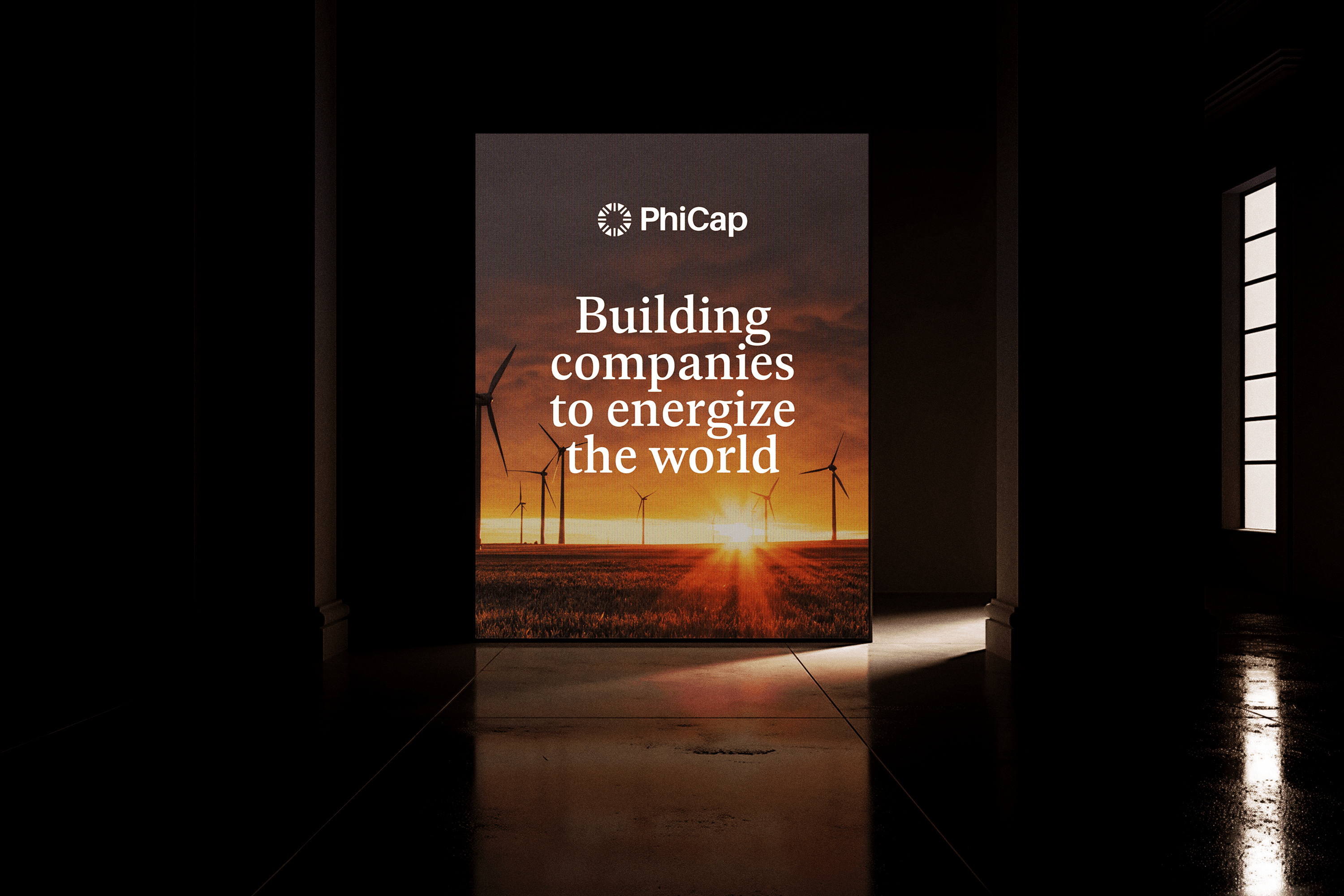
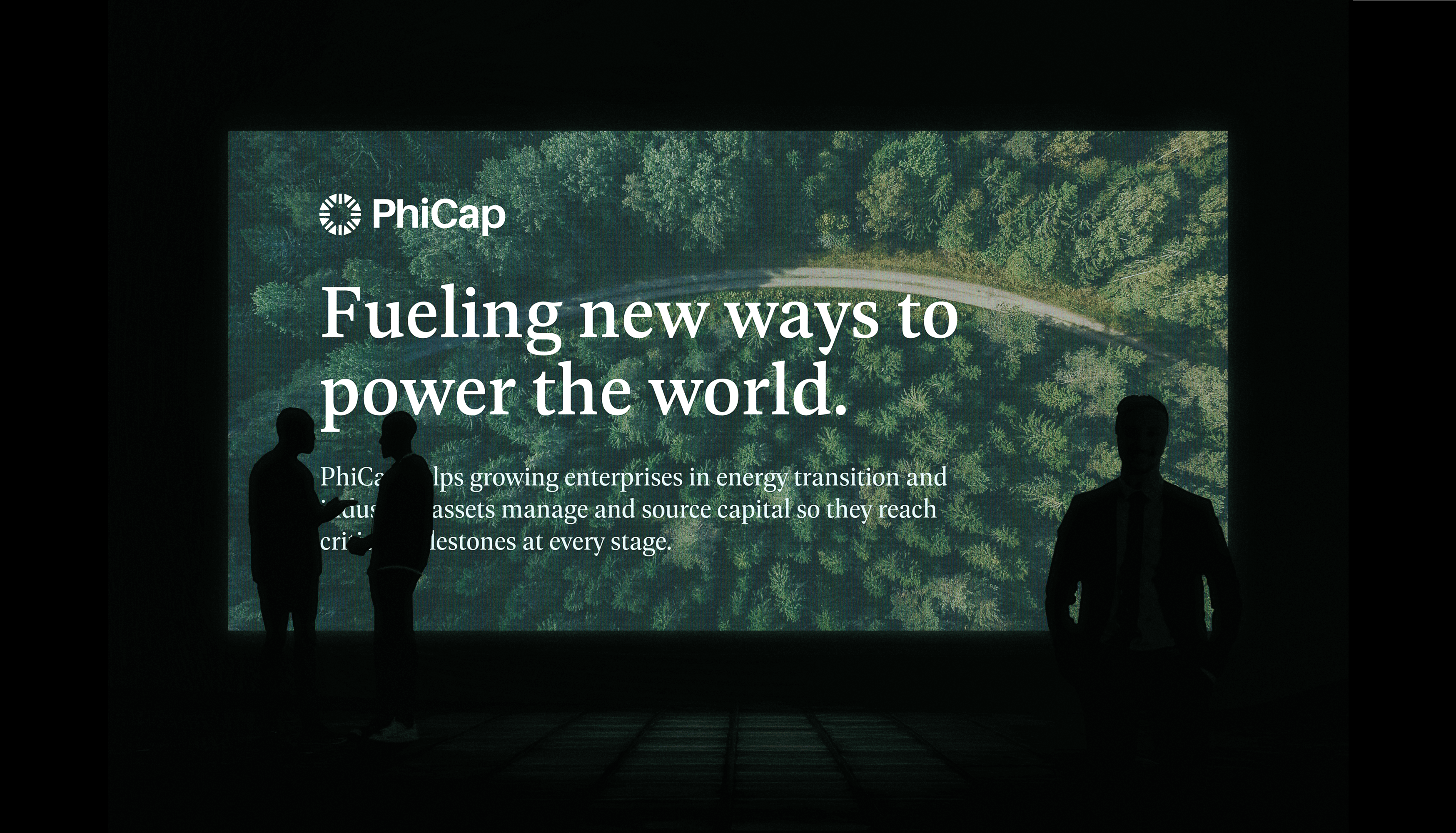
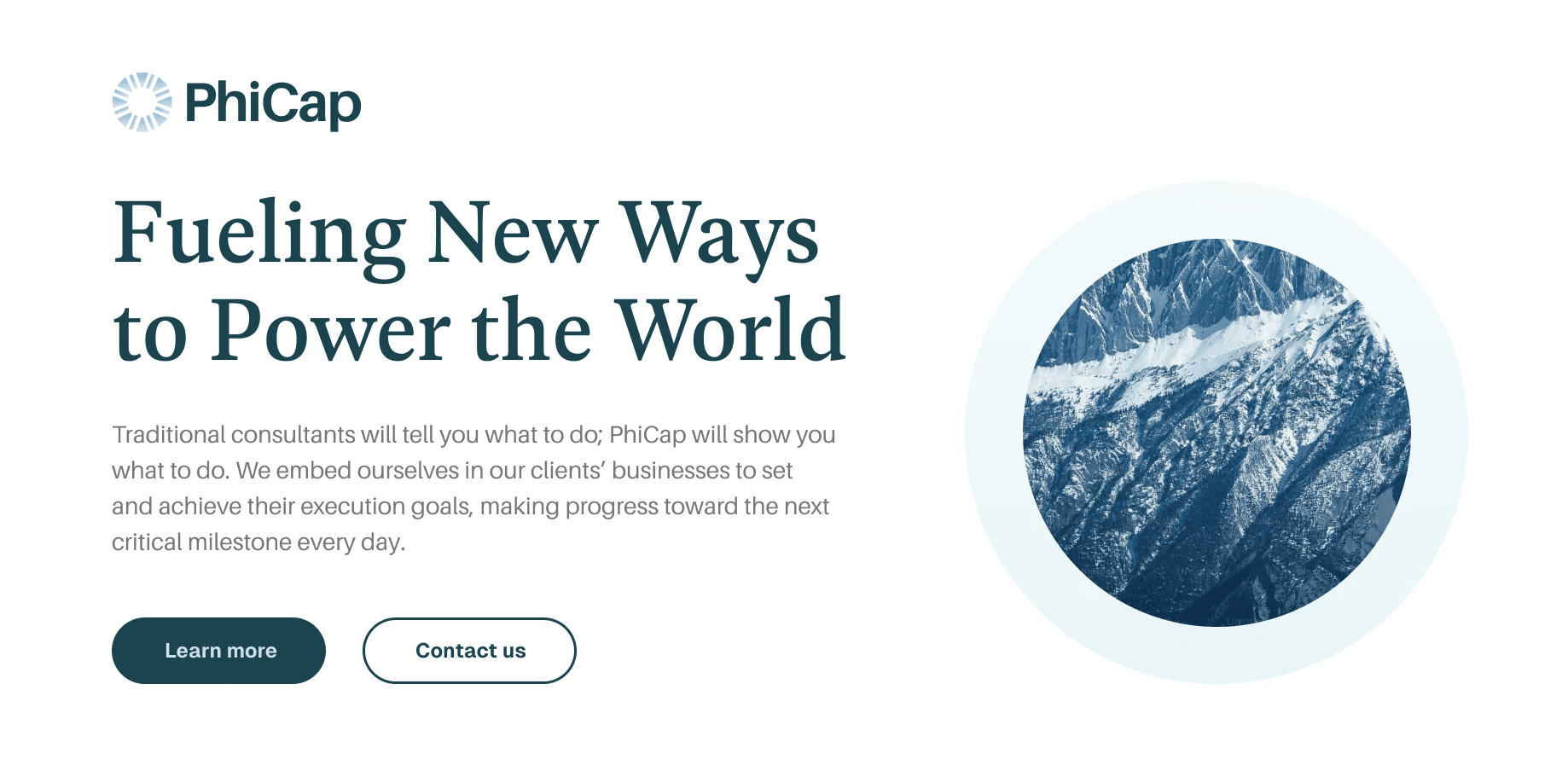
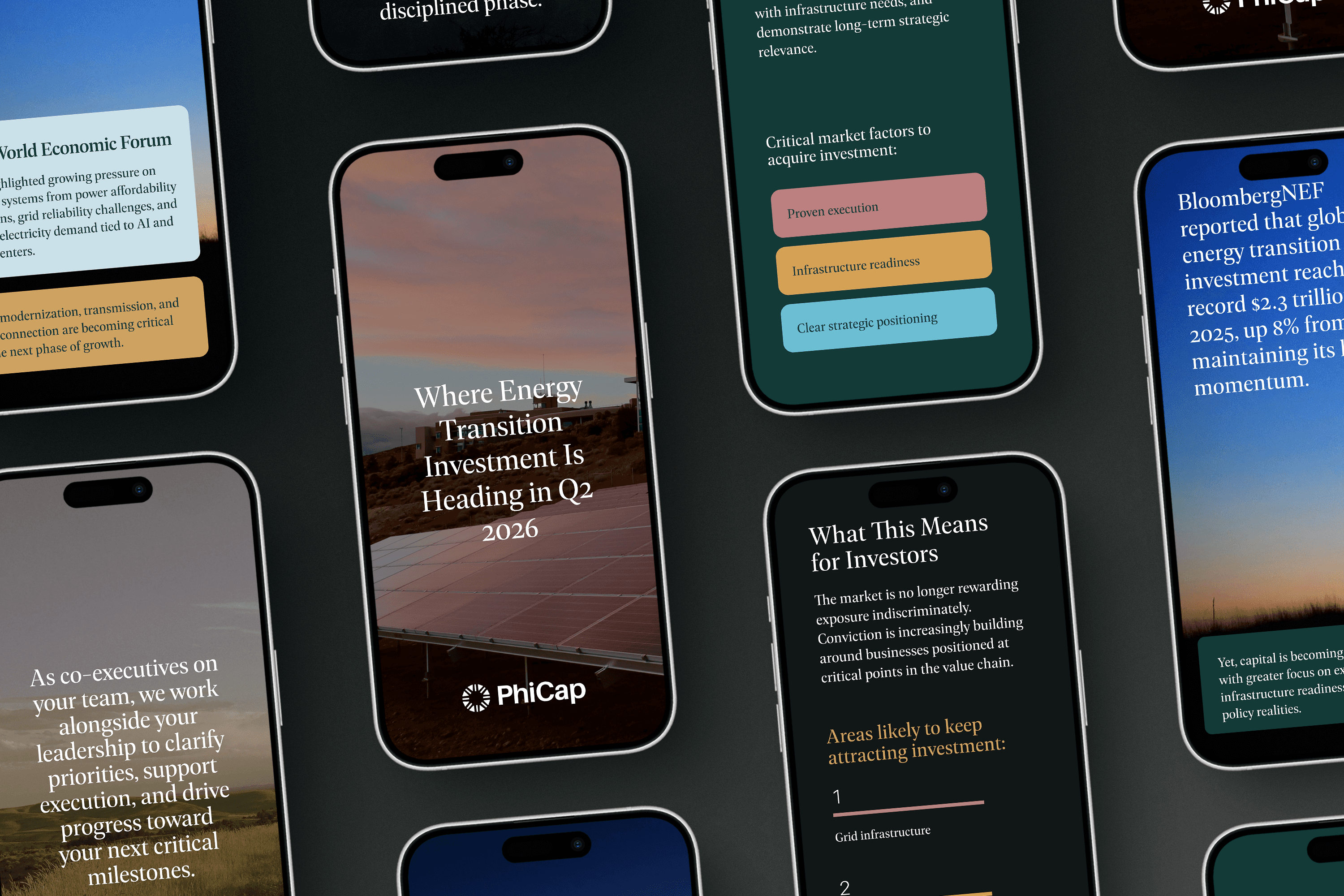
That positioning decision became the input to Brand Foundations. The Core Idea System resolved the gravitas-vs-approachability tension into a central brand posture that could hold both. The Messaging System structured how the idea scaled — language like “Talk less. Act more.” and “Professional without pretension.” gave the team a shared vocabulary for the posture that made PhiCap different. The Written Identity System translated the idea into a voice that could sit in a boardroom with institutional investors and also have an honest conversation with a founder who was having their worst week. The Visual Identity System completed the sequence — a dark forest green palette, editorial serif typography, and cinematic industrial photography signaled authority without shouting.
Marketing Foundations
With the brand in place, we moved into Marketing Foundations. The Customer Journey System mapped how each ICP — advisory clients, capital-seeking founders, and qualified investors — would actually move from awareness to retention, and what content and touchpoints each stage required. The Channel Role System defined what each channel was for: the website as the authoritative destination for thought leadership and case studies, email for ongoing nurturing and investor-specific content, social for network growth and shared experiences, media relations for op-eds and announcements. Three thought leadership pillars were set — Industry Leadership, Strategic Leadership, and Capital Leadership — to organize every future piece of content around PhiCap’s core areas of expertise.
Growth Engine
Finally, the Growth Engine. The Content System turned the pillars into an ongoing pipeline — reports and white papers as flagship assets, blogs and editorials as derivatives, interviews and case studies as cross-promotional tools, instructional content as lead-generation assets. The Campaign System built repeatable campaign structures so each piece of content could be deployed across multiple channels without starting from zero. Publishing workflows, SEO review, approval cadences, and distribution schedules were built into the operations so the engine could run consistently, week over week.
JWC did not hand the engine over and walk away. We kept running it. Hundreds of pieces of content — blogs, editorials, social, email, interviews, and now video — have shipped through the system since launch, each one reinforcing the same positioning, the same pillars, and the same brand posture that was resolved in the earliest work.

PhiCap did not launch. It arrived.
Before the engagement, the firm had the résumés but no way for the market to see them. After the engagement, every surface — website, pitch materials, content, social, email — reflected a company that had been operating for years. The brand did not chase credibility. It projected it.
The compounding effects of running the full Growth Stack show up everywhere now. Capital conversations start further up the trust curve. The content library continues to build authority in the energy transition space. The team has a repeatable system for turning new expertise into market presence, rather than starting from scratch every time. The engine runs.
PhiCap now operates in the market as what they actually are — veteran executives embedded with the next generation of energy and industrial founders. And the system behind the brand keeps that visible, week after week, year after year.
Next projects.
(2016-25©)