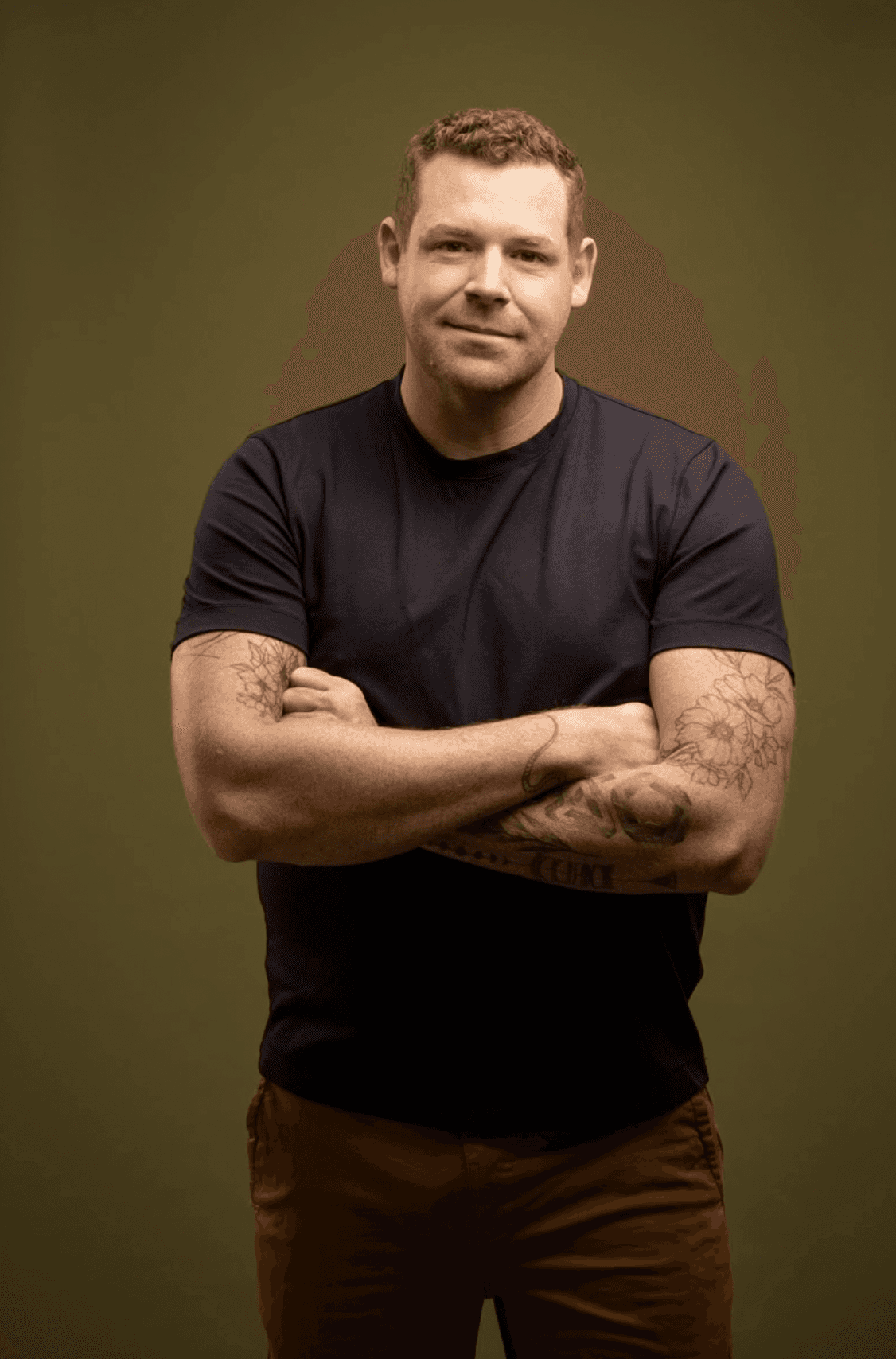
In early 2025, Chris Harrill brought Verdanity to JWC with a real growth opportunity in front of him and a tight window to make it count.
Verdanity was a custom software firm specializing in sustainability and energy data management — the kind of work that turns complicated emissions reporting, utility data reconciliation, and compliance reporting into purpose-built tools governments and organizations could actually use. Chris himself had spent more than a decade as a software engineer working in this space. The work was sophisticated, the team was small and capable, and a new flagship platform — Viaduct, an all-in-one energy intelligence platform — was getting close to launch.
But the brand wasn’t doing the work. The website read like a small consultancy’s site, not a serious custom-software firm capable of building energy intelligence platforms for utilities and government agencies. The story was fragmented across pages. The new product had no proper home. And the GBU Symposium — a major sustainability conference where Verdanity needed to show up looking the part — was just weeks away.
The work was real. The opportunity in front of it was real. The brand wasn’t yet doing either of them justice.

As we worked through discovery, leadership conversations with Chris, and a review of every surface where Verdanity met a customer, JWC ran its Tension System process and revealed the paradox at the center of the brand. Two, seemingly opposite ideas needed to be true at the same time.
Verdanity was mission-driven and technically rigorous in equal measure — two qualities that often work against each other in the sustainability software space.
The mission was real. Chris and the team genuinely cared about climate policy, environmental justice, and the slow, structural work of helping governments and organizations meet sustainability goals. That conviction was a differentiator. Buyers in this space have learned to spot vendors who treat sustainability as a marketing angle rather than a reason to exist.
But mission-driven branding has a known failure mode: it can read soft. Utility procurement officers, sustainability program managers at municipal agencies, and operations leaders at energy organizations are not buying conviction. They are buying engineering. They need to know the team can actually build, integrate, and maintain custom platforms that handle large volumes of energy and emissions data without breaking.
Verdanity needed to project mission and engineering at the same time. The brand had to feel like it cared about climate — and like it could ship the platform.

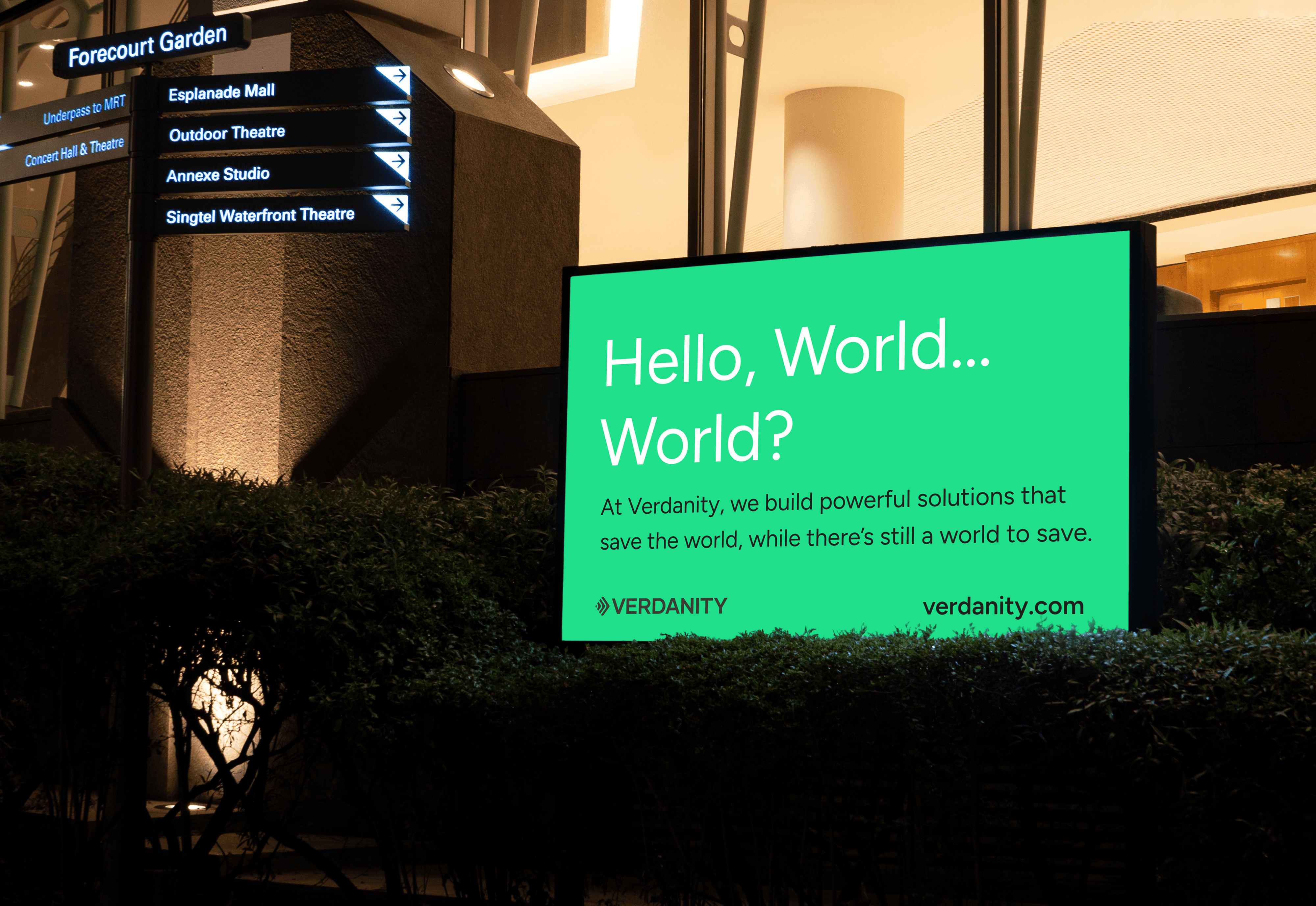

Discovery clarified the angle. Verdanity’s mission wasn’t in tension with its technical depth — it was the reason for the technical depth. Chris hadn’t built the firm to ride a sustainability trend. He had built it because the available software in the space wasn’t good enough for the work governments and energy organizations actually needed to do. The mission produced the engineering, not the other way around.
That insight reframed how the brand needed to talk about itself. Not we care about climate, so trust us. Closer to we care about climate, which is why we build the kind of software that actually solves the problem. The mission justified the rigor. The rigor proved the mission.
The voice the brand needed to find was specific: warm enough to signal that the team genuinely cared, sharp enough to signal that they knew exactly what they were doing. Plainspoken. No marketing fluff, no greenwashing language, no aspirational hand-waving. The audience parsed language carefully and rewarded restraint. That insight became the input to every layer that followed.

The engagement worked through Brand Foundations and into Marketing Foundations execution, with a tight delivery window driven by the GBU Symposium event date.
Brand Foundations
The Core Idea System resolved the mission-versus-engineering tension into a single repeatable posture: software that lets people spend less time managing data and more time making a difference. That framing kept the mission in the foreground while pointing directly at what the engineering actually does — eliminate the data wrangling that keeps sustainability teams from doing the work that matters.
The Messaging System structured how the idea scaled. The brand voice landed on three short phrases that defined how Verdanity talks about its work: No cookie-cutter fixes. No wasted time. Just smart, purpose-built tech. Period-period rhythm. Plain English. The kind of voice that signals the team has done the work and isn’t interested in performing.
The Written Identity System gave Verdanity a way to talk to two distinct buyers without changing register: government and municipal agencies on one side, building managers and energy operators on the other. Both audiences got the same posture — you can’t solve today’s challenges with yesterday’s playbook — translated to the specific concerns of each. The voice carried mission without ever drifting into greenwashing language, and carried technical depth without slipping into jargon.
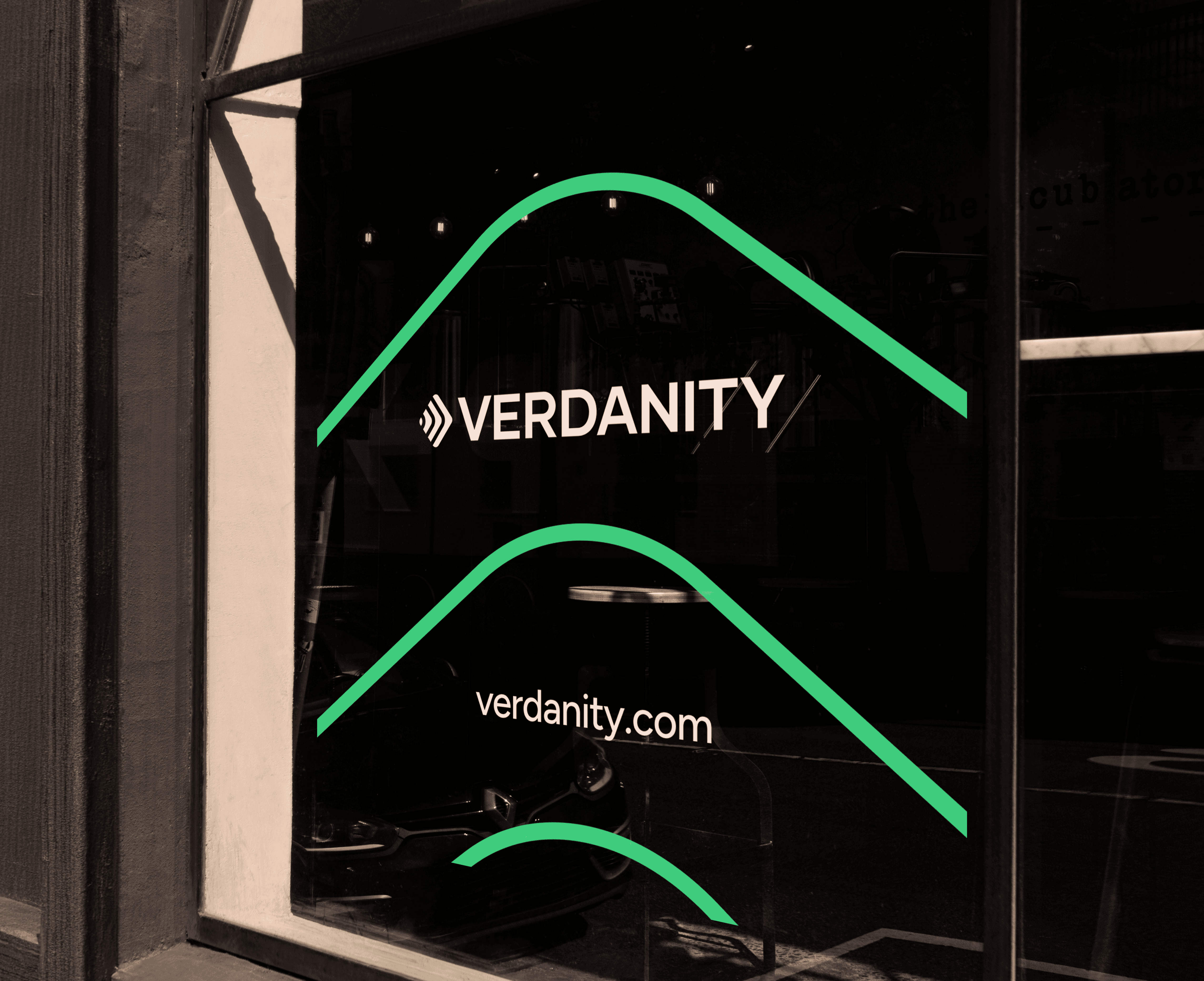
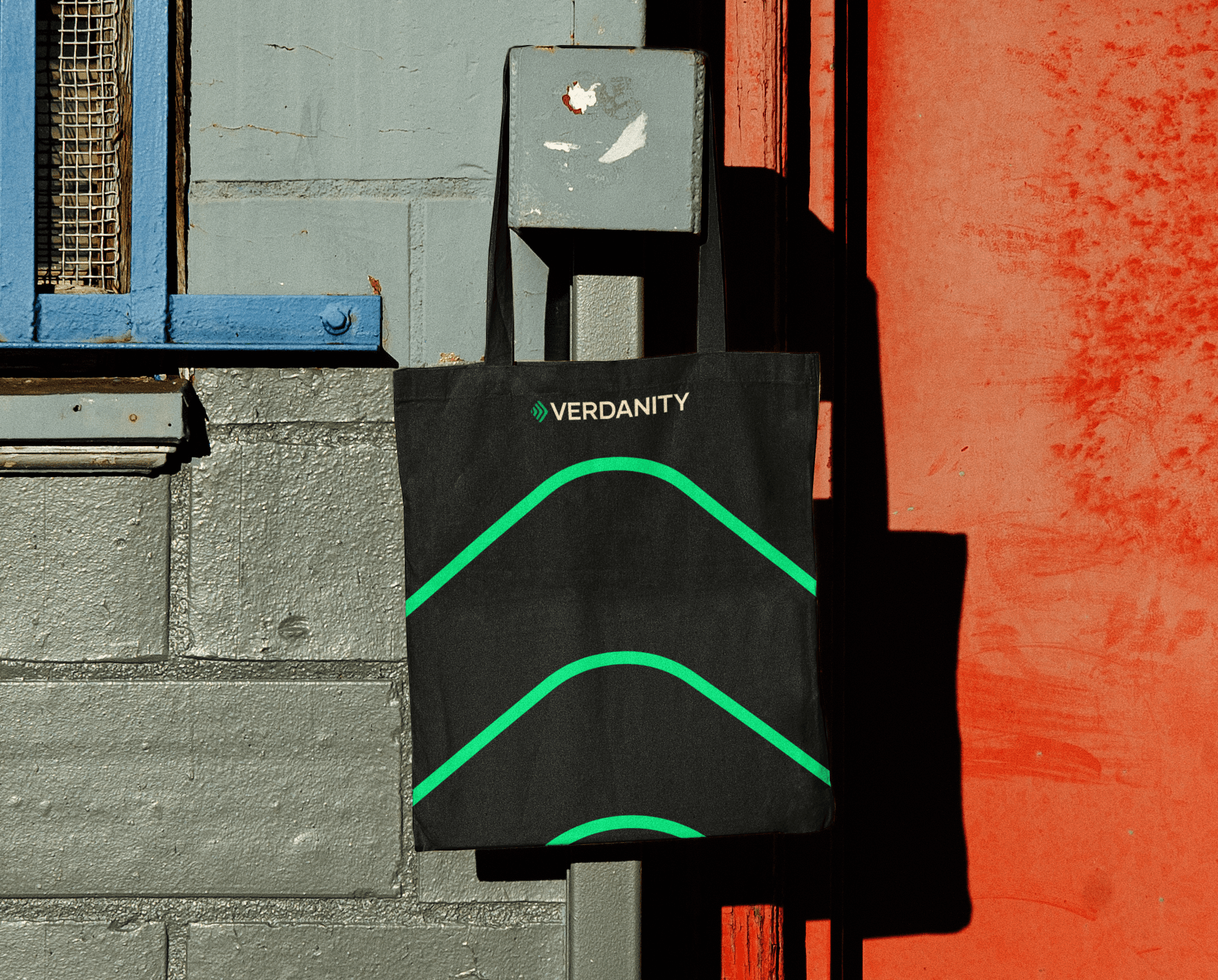
A small visual identity refresh gave the brand a presence that signaled both sides of the posture — a clean, modern aesthetic with a deliberate eco-conscious detail (the website’s light/dark mode toggle was framed as an energy-conservation choice, the kind of small craft signal that proves the mission shows up in how Verdanity builds, not just what it says).
Marketing Foundations
With the brand in place, we moved into Marketing Foundations execution. The Customer Journey System mapped how each of the two ICPs — government and building managers — would actually move through the site, with a separate path for prospects evaluating Viaduct as a product versus prospects evaluating Verdanity as a custom-build partner. The Channel Role System defined what each surface was for: the homepage as the central brand statement, the consulting page as the inbound destination for custom-build inquiries, the Viaduct page as the product launch surface, and a blog as the long-term content infrastructure.
Execution: website, event collateral, and content strategy
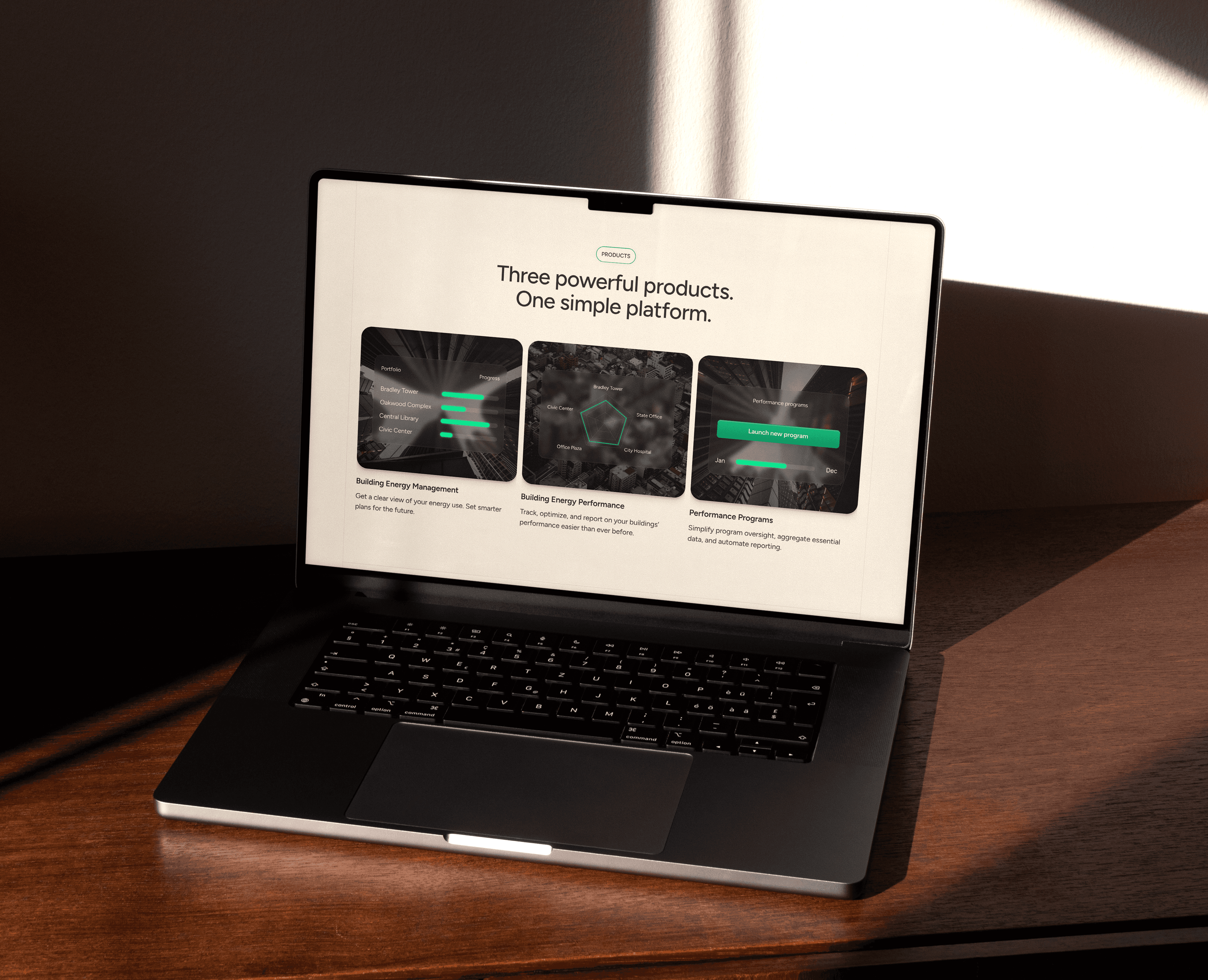
The website was rewritten and redesigned end-to-end. A new homepage led with the rotating-headline hero that captured the breadth of what Verdanity could build (energy management, sustainability reporting, carbon accounting, EV fleet management, real-time analytics, bill reconciliation, workflow automation, compliance reporting). A consulting page anchored the custom-build practice. A new Viaduct product page introduced the platform. Blog functionality was added to give the team an ongoing content surface. Three case studies were structured to show the range of work — citywide energy management, automated benchmarking, environmental justice — each one written to reinforce the mission-meets-engineering posture.
In parallel, JWC delivered the event collateral Verdanity needed for the GBU Symposium. A booth backdrop, print pieces, and on-site materials were designed and shipped on the tight pre-conference timeline. The brand showed up at the event looking like the serious technical partner the work deserved.
A six-month content strategy was developed alongside the website launch, with content creation and social media management running through the months following the event. The brand had a launch surface, an event surface, and an ongoing engine — all built from the same foundation, all carrying the same voice.

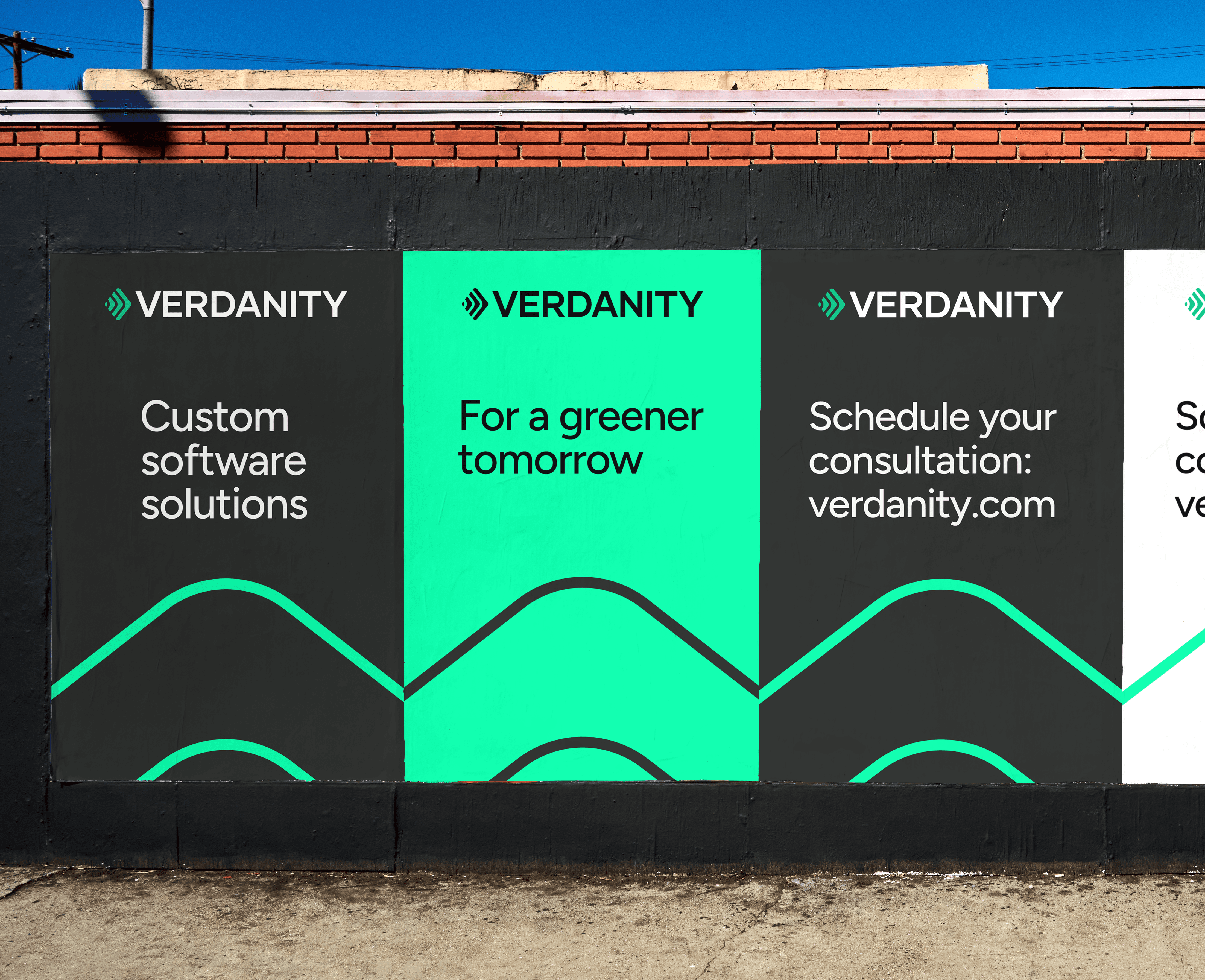
Verdanity stopped looking like a small mission-driven shop and started looking like the serious custom-software firm it had always been.
Before the engagement, the brand undersold the work. After the engagement, every surface — the homepage, the consulting page, the Viaduct product page, the booth, the print pieces, the case studies, the social — reinforced the same posture. Mission and engineering, side by side. The conference appearance showed up the way Chris needed it to. The new product had a real home. The custom-build practice had a clear inbound destination. The content engine had a foundation to operate from.
The downstream effect was felt across the practice. Conversations with utilities, municipal agencies, and energy organizations became easier to open because the brand was now doing part of the introduction. The mission was visible without ever feeling performative. The engineering was credible without ever feeling cold. And the new product had the kind of brand surface from which a real launch could be staged.
A focused engagement, a real event deadline, and a brand that finally matched the work behind it.
Next projects.
(2016-25©)